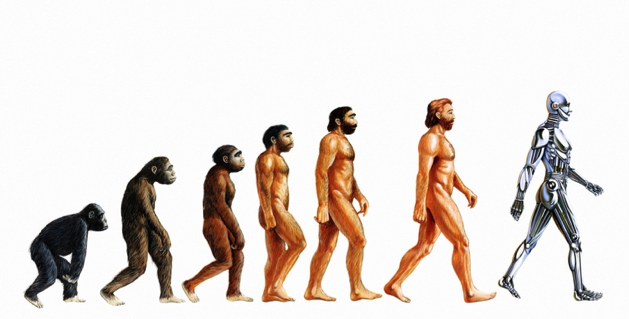
Millions of years ago, Humans - members of the genus Homo - diverged from other primates and faced henceforth a myriad of biological evolutions and behavioral revolutions [1]. Luckily (or not?), Homo Sapiens (for "Wise Man"), the current and sole extant Human Species, dominated over all other Species and conquered Planet Earth's entire fauna and flora. However, ever since tens of thousands of years, no flagrant genetic modifications happened to the modern Human race to an extent that allowed us to speak of a new Human Species. Currently, with the exponential unprecedented technological growth, and the advancement of engineering and biological sciences, Humans are having more and more control over their bodies. Hence, through this article, we'll preview together the future of Human evolution, based on a personal assessment of the latest trends in engineering, biotechnology, and digital communication. I will invite you now to unchain your brain from concrete reality and read critically and open-mindedly as we explore a glimpse of the future the way I see it, bearing in mind that most of what was considered science-fiction and unethical at earlier times has become unarguable scientific truth today.
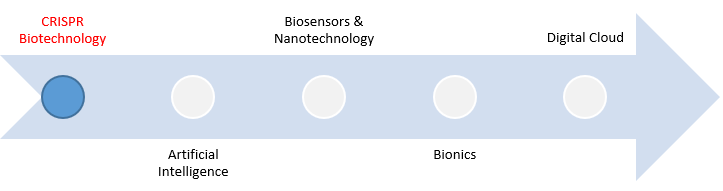
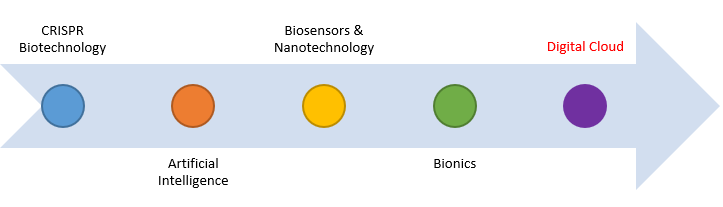
We will now foresee together the future of Human evolution by diving through a multidisciplinary approach, considering the following sections:
- CRISPR Biotechnology
- Artificial Intelligence
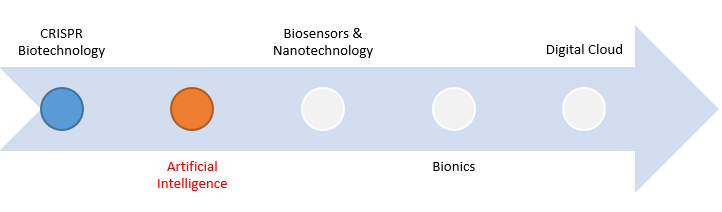
- Biosensors & Nanotechnology
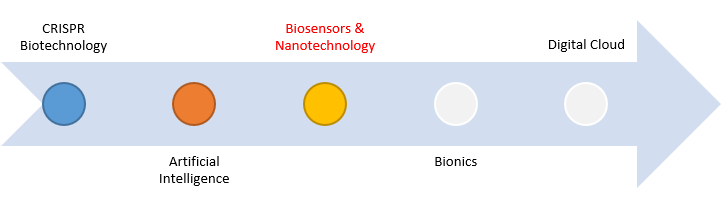
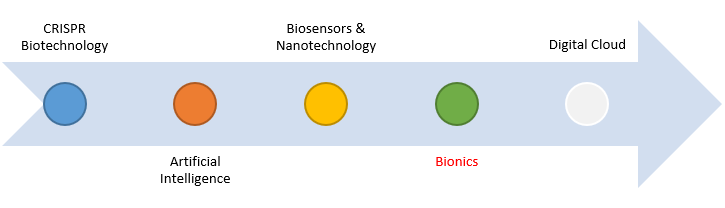
- Bionics
- Digital Cloud
CRISPR Biotechnology:
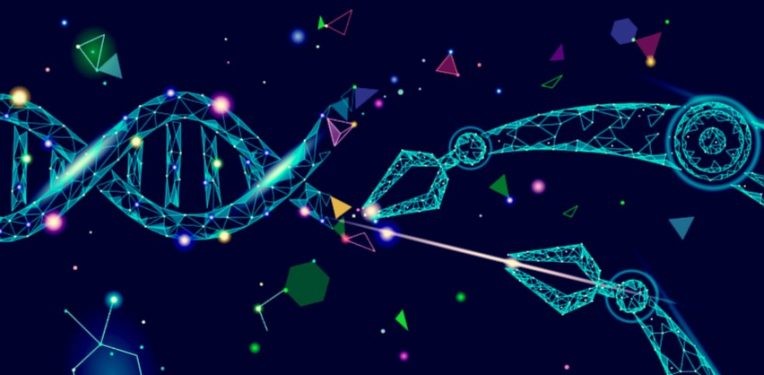
As the name suggests, biotechnology or biotech, in a nutshell, is the use of biological systems and organisms for technological research and development. What we're interested in here is medical biotechnology: applying biotech to enhance the Human Body, mainly via genome editing tools.
So, how can biotechnology and genetic engineering enhance Homo Sapiens?
First, let's briefly have an overview of the advancements in gene editing.
Genome editing is the process of modifying DNA sequences via deletion, insertion, or alteration [2]. In other words, gene editing allows adjustment of the biological genome, to cure for instance genetic diseases. Most common technologies include Meganucleases, ZFNs, TALENs and CRISPR-Cas [2,3]. Recently, the scientific community is interested mainly in CRISPR-Cas, notably for its simplicity, efficiency, effectiveness, and low cost compared to other tools [3].
But what exactly is CRISPR-Cas and how will this tool shape future Human evolution?
According to CRISPR Biotech Engineering's eBook [2], Clustered Regulatory Interspaced Short Palindromic Repeats - or CRISPR - were discovered in prokaryotes (unicellular organism that lack a nucleus or any other membrane-bound organelles, like Bacteria) and constitutes the prokaryote's immunity against viruses. The defense mechanism has two components: a guide RNA (gRNA), specific to the target's DNA sequence, which guides CRISPR to the target's exact position, and a CRISPR Associated Endonuclease (Cas), responsible for cutting the specific DNA [2,3].
You're now flooded with microbiology but bear with me as we'll come progressively to mind-blowing stuff.
Let's stop and reflect on this for a moment: we have a tool that's able to locate, propagate and cut any DNA sequence in the Human body… How could we benefit from it?
To start, speaking of Human body benefits, we are able to modify and repair directly or indirectly specific DNA sequences, by cutting undesirable loci of a chromosome making a gene permanently inactive (Knockouts) or adding and replacing some nucleobases with natural (A-T-C-G) or lab synthetized replacements, inducing precise mutations or fixing undesirable ones (Knockins) [2,3]. The DNA sequence can also be left to repair itself, ergo, causing random mutations. It's also good to mention that different CRISPR-Cas systems exist, notably -Cas9, -Cas12, and -Cas13, among others, with additional modifications done too on existing ones, which adds to the versatility of this wonderful biological tool.
Currently, CRISPR is under extensive research for the treatment and prevention of dangerous diseases and genetic defects, such as AIDS, Cancer, blindness, anti-bacterial drug resistance, and others [3,4]. The technology was used recently too to develop a CRISPR-based quick and efficient test for COVID-19 [5].
Congrats! Now you have an idea on the very basics of CRISPR gene editing. So, let us guess together how this magnificent tool will influence Human evolution, and potentially induce the selection of a new Species.
On the bright side, CRISPR will eliminate birth defects. Scientists will be able to fully "engineer" babies, removing genetic hereditary diseases. Wait, don't get disappointed! Since CRISPR could be used on living cells too, therefore, the current living generations can still benefit from its features. Henceforth, using biotechnology, Humans will be able to cure all sorts of diseases from the source, in a 1 TIME TREATMENT.
Humans will be able to cure all sorts of diseases from the source, in a 1 TIME TREATMENT.
Furthermore, in the future, parents can accurately design their children, by choosing the child's personal and physical characteristics. The choice will not only be limited to the parents' genetic code, but modification can also be made from outside their ancestors' genetic pool. Everything from intelligence, personality, emotions, to hair color, metabolism or even maximum height can be chosen prior to birth and modified after birth.
Moreover, for classical people who don't favor direct genetic interference, CRISPR will be used to enhance organ transplantation and especially xenotransplantation (from nonhuman sources), by modifying the genetic code of the donor or altering the immunity system of the host, facilitating operations and eliminating the need for immunosuppressants; and with the progress in stem-cell research and the rise of 3D Bioprinting (printing organs and tissues from organic material), Humans may become biologically immortal! Ideally, 3D bioprinted organs would be similar to original ones, and thus Humans can print as many copies as needed, without being afraid of mismatch. But in the future, Humans will be able to design, engineer and optimize current organs, and new Homo Species will possess unlimited copies of advanced organs at hand.
Even further, with all this technology available, scientists will be able to create advanced Human Beings, or "Mutants" (as called in the X-Men series), by playing with their DNA structures. These Mutants will obviously constitute a (or multiple) distinct Species, with advanced supernatural abilities. Just close your eyes and imagine the endless possibilities... Some Humans will become winged, others amphibious. The novel Human being will be "bigger, better, faster, stronger". Not only will blind people see again, but individuals may also possess built-in night vision and telescopic sight. Four arms? Blue skin? You choose. The possibilities are boundless…
Yet on the dark side, with every breakthrough comes a negative side… And CRISPR can trigger harm more dangerous than Nuclear Wars.
- Bioweapons and Bioterrorism: With CRISPR in wrong hands, evil scientists and terrorist organizations will be able to develop weapons of mass destruction. Creating a devastating pandemic would take a couple of experiments, and combined with Artificial Intelligence, which I will tackle in a separate section, dozens of devastating Viruses can be generated within few iterations. Even more, soldiers on the battleground will drive their enemies paralyzed in a single gunshot, not necessary targeting their spines.
- Biohacking: Not only diseases can be developed with CRISPR, but also bio-cyberterrorists will find a way to hack your genetics, by inducing special mutations to specific DNA sequences, perhaps altering your neural network.
- Split of social classes: Just like any new scientific breakthrough, genetic modifications will come at high costs, and this will create a critical segregation among Human social classes or let us say among Homo Species! The beauty in gene editing is in the ability to modify genes even after birth, allowing people to modify their personal and physical characteristics, eliminating the need for yoga classes, gym, or even plastic surgery… but only the Rich will get it first. Further, with the potential of supernatural modifications, Mutants will dominate normal beings, or possibly make them endangered. This intense unbalance among Human beings could lead to wars, or even the extinction of Homo Sapiens, the Species as we know it. If what I'm saying sounds utopic, I strongly suggest you watch Marvel's X-Men…
- I'll leave number four for you to fill, as we pass to an equally interesting section...
Artificial Intelligence:
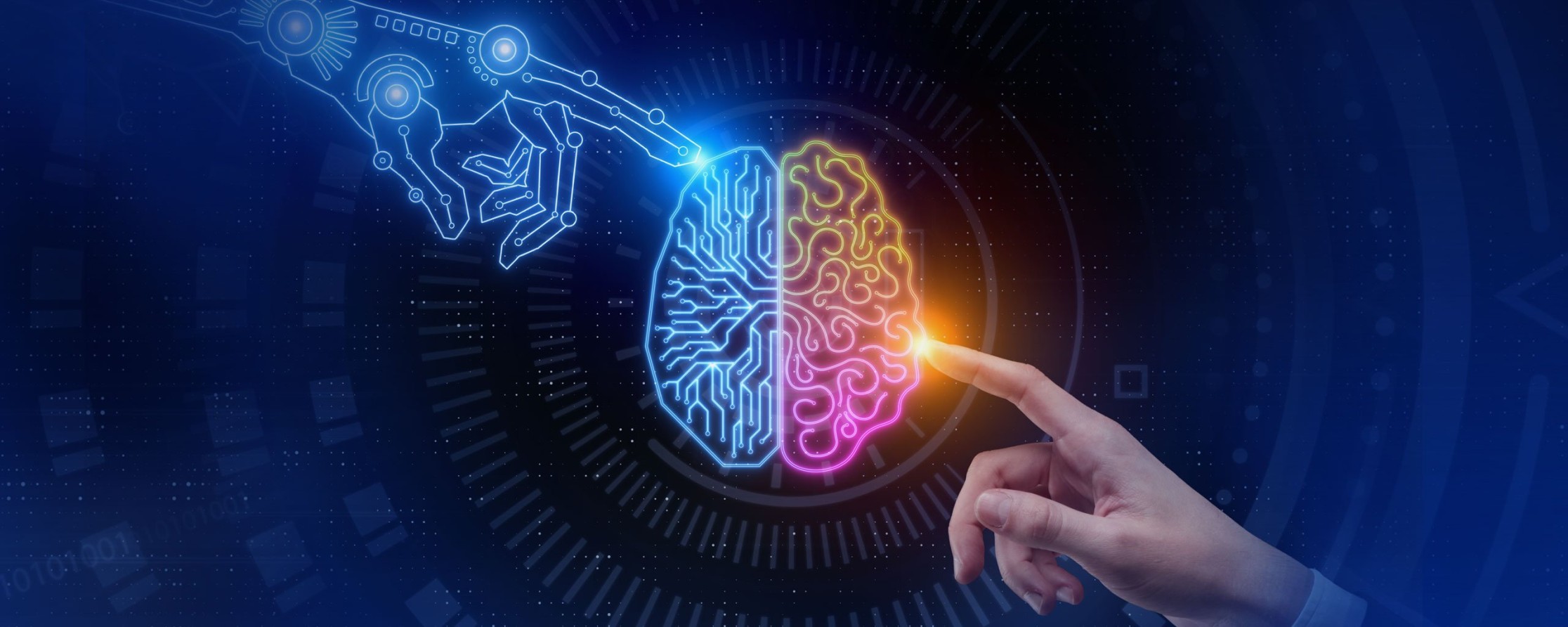
Switching from Biology to Computer Science, let us briefly explore what is Artificial Intelligence without going much into details, and predict its influence on the future of Human Evolution.
Every one of you has definitely heard of A.I. or used Artificial Intelligence directly or not at least once in your lifetime. But what is Artificial Intelligence?
By simple definition, A.I. or Artificial Intelligence is the ability of a machine to imitate intelligent Human behaviors. Many levels and subdivisions of A.I. exist today, with vast applications including autonomous vehicles, speech recognition, game playing (IBM's chess champion), stocks & finance, computational biology, and so on and so forth. Even applications on your smartphones use A.I. algorithms, to recommend you music for instance. So, in essence, A.I. is everywhere, progressively being integrated in our daily lives without us noticing.
Artificial Intelligence encompasses many subsets, from Natural Language Processing (NLP) to Speech Recognition and Machine Learning, usually entangled together. While you may get an idea from the name about the first two subsets, the latter sounds a bit more confusing. So, let us clear it up a bit:
Machine Learning (ML) is an important subset of A.I., consisting of "teaching" computers to perform specific tasks without specific instructions. So, without explicit commands, the ML algorithms learn from examples and make predictions. Hence ML offers the ability to "creatively" solve problems, a trait once privileged to Human beings. From Machine Learning, we can further dive deeper into more interesting artificial learning and processing algorithms, notably Artificial Neural Networks (ANN) and Deep Learning (DL). To start with, in simple terms, ANN mimics the Human Brain's learning methods, with nodes and connections inspired by biological neural systems. DL uses ANN with high levels of complexity and multi-layer integrated networks to accomplish complex tasks. Deep Leaning applications are very promising nowadays, with applications in fields related to healthcare, pharmaceutics, speech, text & image recognition, as well as advanced robotics.
Before we look into the role of A.I. in the future of Human evolution, we need to scratch the surface of a couple more concepts, in layman's terms.
First, we need to know that A.I. or specifically ML algorithm are divided into 4 categories [6]:
- Supervised Learning: The algorithm is trained by providing it with a set of labeled data. The user would correct any faults, until it converges to desired outputs.
- Unsupervised Learning: Opposed to the first one, the A.I. in this case is not provided with appropriate training. It is allowed to find patterns on its own by creating labels or clusters. This can be beneficial since the A.I. may find patterns unrecognized by Humans.
- Semi-supervised Leaning: A combination of the two previous techniques.
- Reinforcement Leaning: The A.I. will learn via trial-and-error, similarly to how Homo Sapiens learn. This learning type is special because it's dynamic and relies on feedback.
Next, we need to understand that A.I. can be categorized into 3 levels [6,7]:
- Artificial Narrow Intelligence (ANI) or Weak A.I.: Commonly used today, Weak A.I. are limited to certain specific tasks, like speech recognition, and thus can outperform Humans at 1 particular task only - a Tic-Tac-Toe game for instance.
- Artificial General Intelligence (AGI) or Strong A.I.: At this level, A.I. shows cognitive abilities similar to Humans, or slightly better. A.I. will learn at its own and mimic Human decision-making capabilities. However, AGI is still at early stages of development.
- Artificial Super Intelligence (ASI) or Super-Intelligence: ASI is still theoretical and hypothetical; nevertheless, at this stage, machines will surpass Human-level intelligence, creativity, decision making or even emotions.
I hope I didn't get you overwhelmed with all these technical terms, as I'm pretty sure you're asking yourselves now: How does this info serve the Article's purpose?
Well, with this general overview on A.I., you will be able to actively analyze the role of A.I. in Human evolution. Note that at this stage, I'll be referring to A.I. solely to avoid confusion.
So, where is A.I. in the evolutionary process? I think you may already know the answer. Let's develop it together:
In the future, A.I. will be integrated with Human intelligence. Brain implants will assist our basic levels of thinking, decision-making and predictions. This advanced level of data analysis and processing will allow Humans to access higher levels of inputs and outputs, in terms of learning abilities as well as creation capabilities. Future couples will be able to analyze one another's emotions with ease and offer creative solutions to fights and misunderstandings. Doctors will recognize diseases faster, Engineers will predict defects and technical problems before they happen (boosting predictive maintenance and eliminating the need for its other forms), and Artists & Writers will access higher levels of creativity and intuition, never ever possible even with the finest psychedelic drugs or meditations. Basic life tasks will become simplified, which will allow future Species to take care of more existential, metaphysical, philosophical, and scientific matters, answering the questions that intrigued Humanity ever since its existence. In addition, A.I. algorithms will be involved in biotechnology, as well as all the upcoming sections that we'll explore in a bit, advancing all their theoretical limits.
In the future, A.I. will be integrated with Human intelligence.
Even further, recently, an A.I. algorithm was able to generate original different instances of random people with precise Human traits, not identical to actual Humans. Therefore, if actual A.I. can design Humans on Software at will, perhaps in the future, combined with biotechnology, people will be able to choose their children's physical traits, feed their inputs into A.I. algorithms, and the results will allow bioengineers to design the fetus's genetics accordingly.
Regrettably, such technology is not risk-free, and its hazards can be very upsetting.
Hitherto, people were afraid that one day, A.I. powered robots will surpass Human intelligence and enslave Humanity. Well, after finishing this Article, you will notice that Homo Sapiens need to be worried that one day, future Homo Species will dominate them, way before the rise of Humanoids. With supernatural intelligence levels, our current Species will get categorized equal to other primates like Chimpanzees in terms of intelligence, for future Homo Species will outperform us big time in cognitive power. Biological Neural Networks have no chance in competing with combined Biological & Artificial Neural Networks at super intelligence levels.
People were afraid that one day, A.I. powered robots will surpass Human intelligence and enslave Humanity […] Future Homo Species will dominate (Homo Sapiens), way before the rise of Humanoids.
As we move to other sections, keep in mind everything said about A.I., since it will be implemented in every aspect of the following disciplines.
Biosensors & Nanotechnology:
Most probably, you've previously heard about Blood Sugar Test. If not, in a nutshell, it's the test performed to measure the amount of glucose in your blood, done usually to diagnose or track diabetes. One simply pierces his/her finger and put a droplet of blood on a strip which will be inserted into a machine for performing the test [8]. The exact molecular binding reaction that allows the detection of glucose is not our main interest in today's article, instead, we care about the transducer that converts the biological signal into an electrical one [9], allowing electronics to read and analyze it. In a matter of fact, a biosensor constitutes of a device that detects the presence of precise microorganisms in the body [10]. Following the glucose level example, we can notice how biosensors operate in 3 steps: biological binding to recognize the molecule (bioreceptor), translating biological messages into measurable signals, electrical for instance, and finally making sense of the measured value by processing the information in order to take action accordingly, directly or indirectly [11].
On the other hand, nanotech - short for "nanotechnology" - can be simply defined as the ability to detect and control individual entities at the atomic or molecular scale [12], basically at the nanoscale (1 nm = 10^-9 m). Nanotech is a vast field under extensive research for years, with applications including medicine, electronics, materials and many more [13].
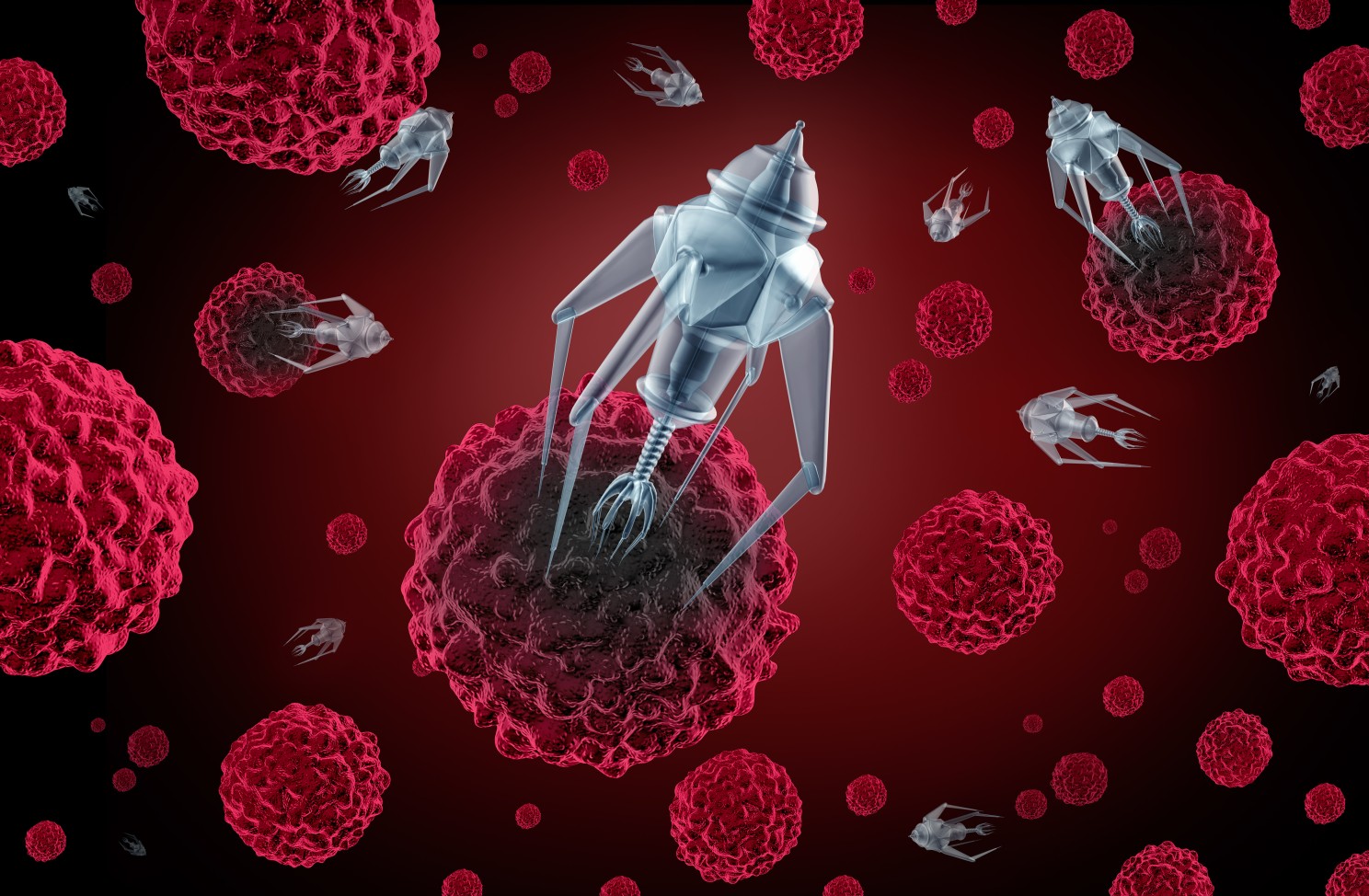
Well, combining the two makes things more interesting! Today, nanotech is playing a big role in the development of tiny biosensors, for medical purposes. Substantial nomenclatures for such combinations pop up every now and then, with each handling a specific need: Nanorobotics (nanoscale robots), Nanobiotechnology (nanotech used to study biological systems), Nanobiosensors (detecting diseases using nanoscale biosensors), and whatnot [13,14].
So…How could such technologies serve Human evolution? Let's discover it together:
Today, a handful of people around the world started injecting chip implants into their bodies, which are giving them a sense of "upgrade" compared to "normal" Homo Sapiens. On the other hand, much more people are heading towards attractive gadgets which offer biometric measurement capabilities. For instance, people can now unlock doors without the need to use physical keys and can monitor their body temperature and heart rate at will.
However, in the near future, every Human will get injected with a combination of nanotech and biosensing devices. From stationary implants to nanobots navigating through our blood vessels, Humans will be able to get instantaneous monitoring and control abilities over the different cells and tissues constituting their biological bodies. Consequently, the future Homo Species will have additional "living" entities actively inhabiting their bodies. With advancement in biomaterials and nanoscale manufacturing, these entities will have interesting properties and functionalities. First, Humans will finally have accurate and complete sense of their health condition at whatever time they please. Further, nanotech agents will bring advanced pharmaceutics, as well as rapid and precise drug delivery. This way, Humans will evolve past the need for traditional medical checkups and drug intakes. So, combined with biotechnology discussed in a previous section, not only a personal medical profile will be at hand for every Human being, but also advanced prevention and treatment against all pathogens and diseases will become accessible promptly.
Nevertheless, the Human mind will always think of an evil way to misuse such breakthroughs. Therefore, it would be better to expose some of the downsides of the rise of Nanobiotechnology.
In a matter of fact, with all of this "Big Data" available, lots of devastating drawbacks can occur. In general, these can be clustered into two sections: Advanced Surveillance & Biohacking. The two consist of unauthorized data collection and monitoring, yet the first is done by known governments and corporations, while the last will be operated by anonymous group of hackers or cyberterrorists.
To start with, once all Humans get injected with biosensors, there will for sure be restrictions and regulations. Governments and Medical Tech Giants will enforce biomedical data collection from Human beings under their governance. Unless nanotech injection is done illegally, now authorities will get to know all your thoughts and feelings. You will sign and agree on "Terms and Conditions" unconditionally, blinded by the fabulous features of biosensors. Yet, your privacy will be at risk the moment you get your first implant. Keep in mind that some will first resist, and only a minority will be able to keep from being "peer-pressured" by their surroundings who couldn't but adhere to the new trend of Human Evolution, fitting society. Just as a sole minority of people don't willingly use the Internet today; in few years from now, only a small community will resist nanotech inserts. Now, I will introduce two possible ways such data can be maleficently used, basing my reasoning on historian and writer Yuval Noah Harari's analyses [15]:
- Bio-digital marketing: Biometric sensors, either nanotech implants, or biomedical gadgets, will allow big corporations to gather and analyze data coming from our own genome, body temperature, brain activity, eye movement, in addition to the traditional digital data based on individuals' physical location and web activity. This would revolutionize the marketing and sales industries. Consider for instance this example given by Harari: If Coca-Cola had access to biometric information about a person who doesn't yet realize he's gay, while its competitor Pepsi don't have this data. Coca-Cola would then suggest to this individual an advertisement with a shirtless guy drinking a cold Coca-Cola, while Pepsi would show him an ad with a woman in bikinis. As you may have guessed, the next day, the person will unconsciously go and buy a Coca-Cola!
- Digital Dictatorship: With such advanced surveillance, Harari suggests that so-called democratic governments as well as despots will have realistic information about your political orientations or honest feelings towards the dictator. Imagine President Donald Trump, Supreme Leader Kim Jong-un or the Governor of your country was in possession of such technology few years from now… I'll leave it to you to anticipate the consequences.
Just as a sole minority of people don't willingly use the Internet today; in few years from now, only a small community will resist nanotech inserts.
Furthermore, having digital devices navigating our bodies, hackers will be pleased to put their hands on such pseudo-electronic pieces. One possibility could be stealing private biomedical information and threating people of sharing it to the public or on the Dark Web. Another possible goal would be controlling your bodies by "biohacking" nanobots, causing physical or mental damage, or even conducting spyware attacks, setting your geolocation privacy at risk. Therefore, the future of Human evolution needs an elite of bio-cybersecurity personnel, able to defend against such dangerous attacks.
The marriage between biology and engineering is not merely limited to the abovementioned industries. Keep going as we'll discover together how Humans will engineer their own evolution in the very near future.
Bionics:
For those of you unfamiliar with the term, bionics - from bio-electronics - is the process of implementing the mechanisms of biological organisms found in nature, to engineer a wide range of artificial systems and devices. In simple terms, it consists of biologically inspired engineering done by mimicking nature. Before scrolling back to the previous sections, I'll ease your confusion by anticipating your two potential questions. To start with, bionics differs bigtime from biotechnology. To understand the difference in laymen's terms, follow this simple analogy: the first applies the concepts of biology in engineering, while the second adopts an "engineering mindset" in manipulating biological systems to be used in research and development. To answer your second answer; Yes, bionics can be (and are) applied to enhance nanotech and biosensors, and vice versa. But as far as we're concerned in this section, we care about the application of bionics in replacing Humans' organs and limbs.
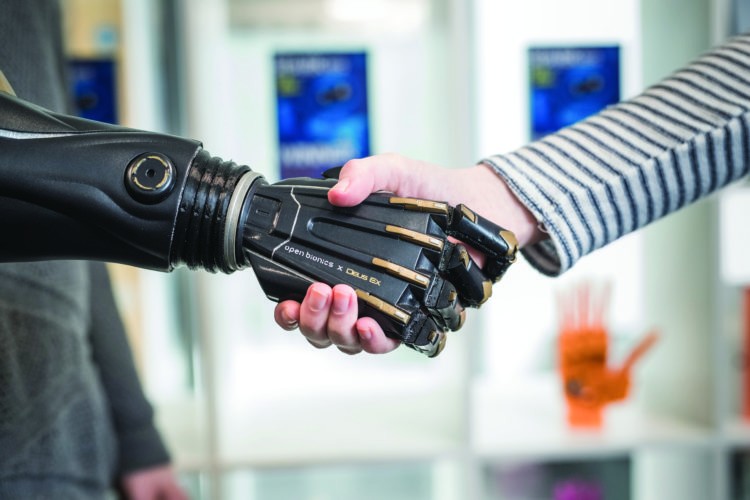
You may not know it, but prosthetic limbs as a concept are old "technology", used by many past civilizations, with the first documented artificial body part found consisted of a prosthetic toe made of wood and leather for an Egyptian noblewoman, somewhere between 950 B.C. and 710 B.C., according to Business Insider [16] and other reputable references. With time, prosthetics developed and became relatively more and more handy. Today, bionic limbs have reached high levels of technological improvements and became lighter, more affordable, and easier to control [17]. While older prosthetics were mechanically (physically) controlled [17,18], most modern limbs rely on electronics to operate; these are called Myoelectric limbs [17,19]. Such prosthetic devices use sensors to read electric pulses from muscle movement or nerve activity, then process the signal ordering actuators to move accordingly [19]. Still, these technologies are nowhere to compete with biological arms and legs in terms of response time, sensory feedback, and versatility. Fortunately, a new era of advanced bionic limbs has recently begun, using brain-machine interfaces to allow prosthetics to take orders directly from the nervous system, using implants on either the brain or muscles, as well as using transducers to read signals straight from the brain [17,20]. These mind-controlled bionic limbs are under extensive research, offering nearly real-time control. The new flex in such technologies is the additional implementation of feedback control and basic temperature and pain detectors, mimicking as much as possible biological limbs. Moreover, bionic technology isn't limited to prosthetics. Engineers are using bionic organs to replace other Human parts, from eyes and ears, to more complex organs like kidneys for instance, all under thorough experimentations.
All of the aforementioned constitutes the tip of the iceberg when it comes to how such devices actually operate, or where are we now in terms of technological advancement, with new breakthroughs uncovered on this matter every other day. Still, we're yet too far from the full potential of bionic technology, with lots of limitations facing current specimens. So, the awaited question can finally be posed: How bionics will affect the future of Human evolution?
Heretofore, people felt inferior, ashamed of losing an arm, leg, or eye. In the future, individuals will willingly get rid of their biological body parts to replace them with bionic ones, and all Humans will have bionic devices replacing or supplementing their original organs and limbs. Humans will become cyborgs: their bodies will be a combination of flesh, bones, and electromechanical materials, operating in cohesion. The technology will reach high levels of sophistication with the promising advancement in materials (such as composites), 3D printing, nanotechnology, and artificial intelligence algorithms. People will be able to feel temperature, texture, pain, light, sounds and other normal sensations they once lost or never had. A new Human Species will rise, consisting of fully modular individuals. But why will Humans imitate Humanoid robots and become Cyborgs?
Heretofore, people felt inferior, ashamed of losing an arm, leg, or eye. In the future, individuals will willingly get rid of their biological body parts to replace them with bionic ones.
People may argue that using stem cell technology and 3D Bioprinting, we may regrow arms and legs, and replace them with ease. But, in such cases, we're not speaking of evolution! With bionics instead, we can reach further upgrades. First of all, possessing bionic body parts is just cool after all… No? Being highly modular, these devices will give people the flexibility to choose from a wide range of extensions [21]. A hand can become a tennis racket through a simple swap. You can select your foot's color, shape, and material. If you think that's crazy, know that such is already being applied. Further, people can go beyond what is offered by Mother Nature. Want a jetpack on your back or microscopic vision? Say no more! Installing these upgrades will be as easy as playing with Lego blocks. Even better, with all these possibilities, Humans may become less exposed to biological diseases and infections; and combined with biotechnology, which was tackled in the first section, the evolutionary possibilities are limitless.
Nonetheless, no technology is free of harm, and bionics may pose high levels of danger if misused. In fact, one of the greatest hazards is that civilian cyborgs may become weaponized, threatening other "inferior" individuals. A "fist fight" between cyborgs can induce war level damages, while the same fight between a cyborg and a "normal" Human means instant death to the latter. Biomechatronic technology will outpower and outperform organic life, nucleic acids, and amino acids; and Humans will evolve faster and stronger. Obviously, a new benchmark for power and status will emerge, and battles or wars will be inevitable.
In addition, and similarly to previous evolutionary forms, integrating microprocessors and sensors into the Human body put it at risk of hacking. Just as computers are hackable, or biological entities will be hackable too as seen in previous sections, combining the two leads to more vulnerabilities open for evil minds to exploit. I will go no further in exploring the downsides of hardware penetration, since it's pretty much obvious how harmful can such attacks be, so just imagine them performed over the most advanced living creatures on Earth - Humans (either presidents or mass populations) … Chaos would be the new Status quo.
Chaos would be the new Status quo.
Digital Cloud:
By now, and after diving through my thoughts and visions about the not-so-far future of Human evolution, I truly believe you're able to guess this last section on your own somehow accurately, by solely scanning its title. Yet, let me guide you one last time, for it will include some more incredible theories.
It's obvious as you've reached this stage of reading that technology will definitely be integrated in the Human body, to a certain point that it will become a norm, forming distinct Human Species. We've discussed the pure biotechnological enhancement through CRISPR, the behavioral influence and mechanization of the Human body through the mix of biology and engineering via Bionics, Biosensors and Nanotechnology, and saw together how Artificial Intelligence will revolutionize our modern Species as we now it. Thus, we can now discuss the amalgamation of the Human body with the Internet, most specifically, the fusion of the Human Brain with the Digital Cloud.
By simple definition, the "Cloud" combines servers and data accessible over the Internet anywhere in the World [22]. So why is it needed? Apart from writing and reading information to and from it, which facilitates storing and sharing information, for either private or public use; the Cloud offers the ability to do "Cloud Computing", which allows users to access virtual machines, permitting users to conduct heavy calculations and simulations in the Cloud. With Cloud technology at hand, companies are able to overcome the expenses and physical limitation of Hardware, to a "more reliable and limitless" server [22].
All of the aforementioned will one day be implemented to overclock Human brains.
For long, neuroscience experts and enthusiasts debated the potential of the Human Brain, are we merely using 10%? Can we reach 100%? Or are we already at maximum capability? Regardless of what the true answer is… it's wrong! The simple reason behind my claim is that some people are neglecting a missing key point in their equations and theories. In the future, modern technology will be integrated in the Human body, which allows me to confirm that at the moment, we may be using anywhere from 1 to 100% of our biological brain capacity, but not one iota of its minimum potential as soon as it becomes integrated with the Digital Cloud. Today, extensive research is being conducted to connect our neural cells to the Internet. The most interesting part is that we're yet in the very beginning of understanding Neuroscience entirely, while the Cloud as well as Nanotechnology are still in their first stages of development.
At the moment, we may be using anywhere from 1 to 100% of our biological brain capacity, but not one iota of its minimum potential as soon as it becomes integrated with the Digital Cloud.
Before we move one step further, let's review together IoT, or the Internet of Things. IoT is the integration of everyTHING to the Internet; and by everything, I mean Smart TVs, Home Assistants (think Google Home or Amazon Alexa), curtains, toasters, gadgets and what have you [23]. All of the "dumb" things you once possessed are now upgraded, allowed to communicate with one another, facilitating supposedly your daily life. In essence, IoT connects devices together.
With all these concepts now familiar to you, let us move to how the Digital Cloud will shape the new Human Species.
In the future, our Brains will be connected to the Internet, and that's for sure. People will get to communicate with each other faster than ever, eliminating the need for all classical and revolutionary devices ever created. To get a glimpse on where we are as of now and in the near future in the world of interpersonal communication, I advise you to review my first article published on LinkedIn… you'll definitely love it too :)
In the future, our Brains will be connected to the Internet.
Back to this one, future Humans may ditch traditional communication via natural spoken Language, and Digital Telepathy will become the new norm. Imagine how fast ideas may be shared in private chats or public forums, all of which done over the Cloud and directly via the Brain, with the little help of a tiny third-party, implanted in our brains. Just like the modern use of Clouds, people will also be able to read and write to the Cloud directly via their brains. Memories will be uploaded and downloaded to and from the Internet at a glance, extensive thinking and information processing will be done over Cloud servers, and knowledge will be shared and acquired at ease. Intelligence will be redefined, and its boundaries expended. No more memory loss issues, nor difficulties in Learning. Here, I'd like to recall from Steve Hoffman (AKA Captain Hoff) who once gave an interesting example while discussing a similar topic in a TEDx Talk [24]; Captain Hoff claimed that connecting our brains to the Internet would perhaps allow people to share memories. For instance, in the future you may share your skydiving experience with someone else who never ever tried it before! The person may even feel the emotions you had too. Even further, instead of showing us photos and videos from their wedding, our grandparents could one day share the exact scenes as memories by simply uploading this piece of information to a shared Cloud.
To wrap it up, we will move from the era of IoT to the era of IoB. Before you Google-it, let me tell you that although this word may already have a vague definition, I will provide you with my own; which, perhaps, you'll read it one day along with my Name in a shared dictionary over the Cloud! IoB, for Internet of Beings, will be the most discussed topic in the future. It simply defines as "the integration of everyONE to the Internet", and by everyone, I mean every member of the current and future Homo Species.
We will move from the era of IoT to the era of IoB.
So far so good, right? Not so fast.
With such technology approaching, bio-cyberattacks come inevitable. As we went over the previous sections together, you now have a good understanding of what such attacks are, and what is their potential; and what is more vulnerable than a Brain connected to the Web? Should it be linked to a private or public network, the Brain will be helpless against bio-cyberattacks. Black Hats will eventually find a way to infect Humans with all types of Malware, just as they're doing everyday with computers.
Remember, all of the beforementioned threats do not exist today (as far as I'm informed!); however, they will one day, sooner than you think. Therefore, the purpose of me sharing with you such information is not to scare you, but instead, to warn you ahead of time to where we might be going if regulations are not set properly.
To unbox your thinking about what could get worse with such technology in the wrong hands - for the sole purpose of awareness - let's explore how some cyberthreats can evolve to become bio-cyberthreats:
- Botnets: Biohackers may infect people with malware, creating an army of zombies, brain-controlled individuals, following orders as groups or individuals. I'll give you the freedom to guess what could be done with these Bots in possession of dangerous organizations…
- Ransomware: Biohackers may capture your memories and ask for expensive ransom.
- Man-in-the-Middle Attacks: Biohackers could intercept your connection to the Cloud, or your communication with other individuals or groups, allowing them to access your thoughts and modify them at will.
A question may be posed at this stage from tech enthusiasts: How will Quantum computing, Blockchain technology and Web v3.0/4.0 affect the future of Human Evolution? Well, we can only hope the outcomes to be ameliorative!
To Summarize...
As we have seen, the near future will bring a giant leap that will mark the History of Humanity. Unlike earlier forms of evolution, which were merely biological and imposed, the future of Human Evolution will be multidisciplinary and most importantly induced. Different Species will emerge as a result of countless technological advancements transcending Homo Sapiens, until, perhaps in the not-so-distant future, there will be no distinct Human Species or identity. All these advanced, interconnected technologies will ultimately bring an end to the concept of Species itself. The initial phases will involve testing on "Brave Men & Women," devoted to science and technology (alongside others motivated by money). These individuals will lay the foundation for Human evolution. Gradually, as these technologies advance, influential political figures and the wealthy elite will benefit from cutting-edge evolutionary tools, resulting in a new segregated hierarchical system unprecedented in the known History of Humanity. This system won't be determined by social status, race, or wealth; instead, the upper class will comprise those who are the most advanced from an evolutionary perspective. War during this period will likely be inevitable; with a dramatic imbalance in brain-power and physical-power, the outcome seems obvious. Thus, pure Homo Sapiens will become mere History, much like Homo Erectus and Neanderthals are to us today. Until that point, establishing appropriate restrictions and ethical guidelines is crucial-not to prevent or halt this process, but to ease and minimize the negative impacts of this revolutionary evolution. Here, we must pause and reflect on a profound philosophical question that has haunted Humanity since the first conscious being: Will all this finally bring Bliss and Serenity to Humanity? Or will we fall even deeper into misery? Many factors, including controllable hormones and superior rational thinking, certainly play significant roles in this endless quest, but ultimately, Human curiosity will never end its pursuit for Happiness…
Human curiosity will never end its pursuit for Happiness…
References:
- Harari, Y. N. (2014). Sapiens: A brief history of humankind. London: Harvill Secker.
- BTE, A. (n.d.). CRISPR Biotech Engineering. Retrieved July 10, 2020, from https://crispr-bte.com/
- JAX Online MiniCourses. (n.d.). Retrieved July 10, 2020, from https://learn.education.jax.org/browse/jaxge-online/courses/crispr
- What are genome editing and CRISPR-Cas9? - Genetics Home Reference - NIH. (n.d.). Retrieved July 10, 2020, from https://ghr.nlm.nih.gov/primer/genomicresearch/genomeediting
- Guglielmi, G. (2020). First CRISPR test for the coronavirus approved in the United States. Nature. doi:10.1038/d41586-020-01402-9
- Gavrilova, Y. (2020, April 08). Artificial Intelligence vs. Machine Learning vs. Deep Learning: What's the Difference. Retrieved July 10, 2020, from https://serokell.io/blog/ai-ml-dl-difference
- Anurag. (2020, May 01). 3 levels of Artificial Intelligence. Retrieved July 10, 2020, from https://www.newgenapps.com/blog/3-levels-of-artificial-intelligence/
- Higuera, M. (2019, July 2). Blood Sugar Test: Purpose, Procedure, and Results. Retrieved July 10, 2020, from https://www.healthline.com/health/blood-sugar-tests
- Sensors. (n.d.). Retrieved July 10, 2020, from https://www.mdpi.com/journal/sensors/sections/biosensors
- Biosensors. (n.d.). Retrieved July 10, 2020, from https://www.nature.com/subjects/biosensors
- Applications for Nano Coatings. (n.d.). Retrieved July 10, 2020, from https://www.surfix.nl/applications/biosensors
- What is Nanotechnology? (n.d.). Retrieved July 10, 2020, from https://www.nano.gov/nanotech-101/what/definition
- Jianrong, C., Yuqing, M., Nongyue, H., Xiaohua, W., & Sijiao, L. (2004). Nanotechnology and biosensors. Biotechnology Advances, 22(7), 505-518. doi:10.1016/j.biotechadv.2004.03.004
- Nanobiosensors. (n.d.). Retrieved July 10, 2020, from https://www.sciencedirect.com/topics/engineering/nanobiosensors
- Yuval Noah Harari. (2018, November 20). Yuval Noah Harari on Impact Theory [Video]. YouTube. Retrieved July 10, 2020, from https://www.youtube.com/watch?v=01eKd7FFLnk&feature=emb_logo
- Spector, D. (2014, August 19). The Incredible Evolution Of Artificial Limbs Started With This Wooden Toe. Retrieved July 10, 2020, from https://www.businessinsider.com.au/the-evolution-of-prosthetic-technology-2014-8
- Bionic limbs. (2017, September 26). Retrieved July 10, 2020, from https://www.science.org.au/curious/people-medicine/bionic-limbs
- Clements, I. (2020, June 18). How Prosthetic Limbs Work. Retrieved July 10, 2020, from https://science.howstuffworks.com/prosthetic-limb4.htm
- Myoelectric prosthetics 101. (n.d.). Retrieved July 10, 2020, from https://www.ottobockus.com/prosthetics/info-for-new-amputees/prosthetics-101/myoelectric-prosthetics-101/
- Researchers build brain-machine interface to control prosthetic hand. (2015, April 02). Retrieved July 10, 2020, from https://healthcare-in-europe.com/en/news/researchers-build-brain-machine-interface-to-control-prosthetic-hand.html
- The Guardian. (2018, June 26). Beyond bionics: how the future of prosthetics is redefining humanity [Video]. YouTube. Retrieved July 10, 2020, from https://www.youtube.com/watch?v=GgTwa3CPrIE
- What Is the Cloud? | Cloud Definition. (n.d.). Retrieved July 10, 2020, from https://www.cloudflare.com/learning/cloud/what-is-the-cloud/
- Burgess, M. (2018, February 16). What is the Internet of Things? WIRED explains. Retrieved July 10, 2020, from https://www.wired.co.uk/article/internet-of-things-what-is-explained-iot
- TEDx Talks. (2017, August 29). New Brain Computer interface technology | Steve Hoffman | TEDxCEIBS [Video]. YouTube. Retrieved July 10, 2020, from https://www.youtube.com/watch?v=CgFzmE2fGXA
"It takes me hours to craft minutes-worth of words which will hopefully inspire you for days, months or years!" - Elio Gereige
Comments